Buy Now! Return Now?


As the holidays recede, it’s time to take stock of our purchasing habits and see if we can improve in the year to come. The holidays are full of temptations to purchase things we don’t need and Black Friday contributes to this behavior. More consumption = more waste. According to one study, 80% of what we buy ends up in landfill, incineration, or low-quality recycling. In the US, waste increases by a further 25% from Black Friday to the New Year.
Holiday spending is growing. The National Retail Federation anticipates that American holiday spending in 2025 will exceed 1 trillion dollars for the first time.
Black Friday and Cyber Monday used to be distinct, but now they’ve blended into one long weekend. Close to 85% of Americans now shop online. In fact, 20-25% of all retail purchases occur on the internet, and the ratio of online purchases increases during the holidays. In general, we’re more likely to buy clothing, accessories, furnishings, and electronics online than in-store.
Many retailers were hesitant to embrace e-commerce at the turn of the century, believing that no one would ever buy something they couldn’t touch or try. This strategic error brought down mega-fast-fashion giants like Forever21 and many department stores. It’s hard to believe that in 20 years, we’ve transformed into a society where purchasing things sight unseen has become the norm.
Consumers have adapted by purchasing multiples and returning what they don’t want, a practice called “bracketing”. Retailers have adapted by embracing “reverse logistics”–the optimization of returns. 19.3% of online sales will be returned in 2025. For online apparel specifically, returns can average 40% of sales. Holiday returns in the US alone are worth more than 3 billion dollars per year.
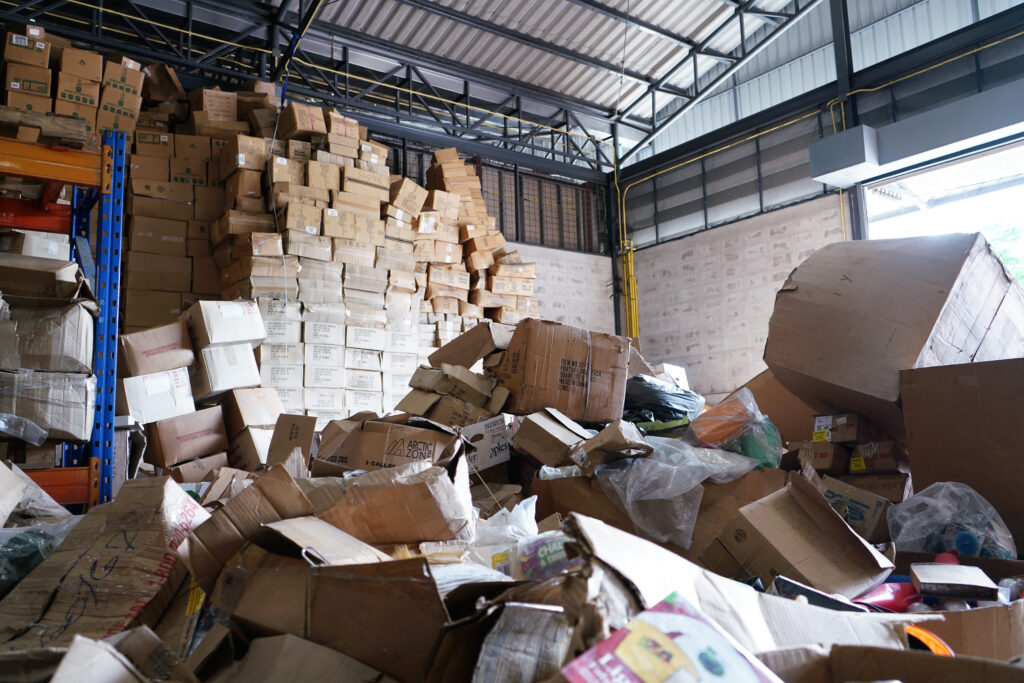 The operational cost of returns is high, particularly when 1 in 6 returns is fraudulent. People return empty boxes, used or worn items, or even swapped items. So, what happens to our returns, real or otherwise? Many shoppers assume that items go back up for sale. The reality is that many retailers don’t reshelve opened items, no matter how pristine their condition. It’s cheaper and more efficient to discard things than to inspect and restock them.
As much as 80% of returns end up in landfill or shipped to developing countries, where they become 8-10 billion pounds of waste each year. Companies like Amazon may claim that they do not send anything to landfill. In reality, they send returned items to third-party liquidators or waste management companies, at which point i is no longer their problem. Even when resold through the secondary market, most of what we buy now is junk with limited value and longevity.