The First Thanksgiving: Indigenous Perspectives

On November 11,1620, the Mayflower arrived on the shores of modern day Cape Cod. The ship was aiming for New York City, but fell short after facing challenging winds. On board were 101 Pilgrims who wanted to break from the Church of England. These settlers established the second English colony in the “New World”, which became known as Plymouth.
Only 52 people survived the first winter in Plymouth. It was harsh and brutal, and the Pilgrims were both weak from their journey and ill-equipped for the new environment. The following spring, Pilgrims made contact with the Wampanoag, a Native American Tribe that had lived in the region for over 10,000 years.
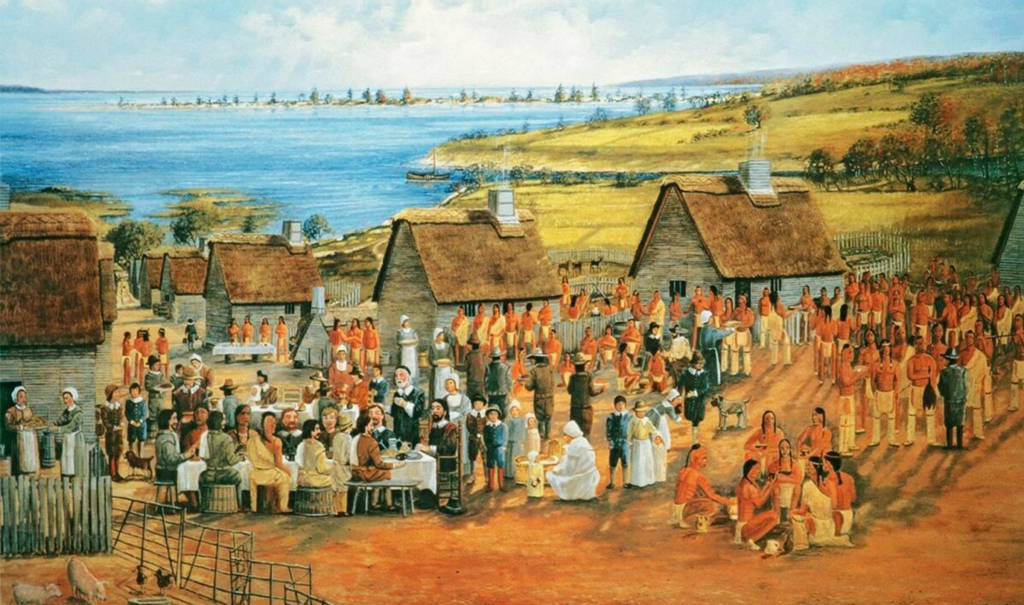
The Wampanoag taught the Pilgrims how to plant, fish, and cultivate the land–essential skills that allowed the colony to thrive. In a short year after their arrival, the two groups celebrated the first Thanksgiving together, described as:
a harvest feast where settlers and Wampanoag shared deer, corn, shellfish, and roasted meat, playing games and dancing.
The peace did not last, and the story itself was not the whole truth. The Wampanoag had fought with the English since 1524. In fact, 6 years before the Mayflower, the English lured 20 Wampanoag men onto a ship to sell them into slavery. The English also brought and weaponized a host of diseases like small pox, yellow fever, and leptospirosis. Centuries of genocide following first contact killed 90% of Native Peoples.
400 years later, a well-known Wampanoag activist would go on to describe the welcoming of the Pilgrims in 1621 as the tribe’s “biggest mistake”. Within generations of the Mayflower, Wampanoag land was stolen and children were sent to harsh boarding schools where many died. People, traditions, and languages were lost. Thanksgiving is now known to the Wampanoag as the National Day of Mourning.
While gratitude is a beautiful message during Thanksgiving, we should also hold space for the atrocities of colonization. Today, Native Nations across the U.S. are fighting to reclaim their sovereignty, land, and culture. Indigenous peoples around the world continue to fight for their right to self-determination.
Try pairing and sharing one or two of the above actions with a purposeful land acknowledgement before your Thanksgiving meal!
Image credit: “The First Thanksgiving 1621” (1995), painted by Karen Rinaldo of Falmouth, Massachusetts, and recognized by Wampanoag tribal leaders and historians as one of the few accurate depictions of the event.