How the Unthinkable Became Routine: The Power of Normalization
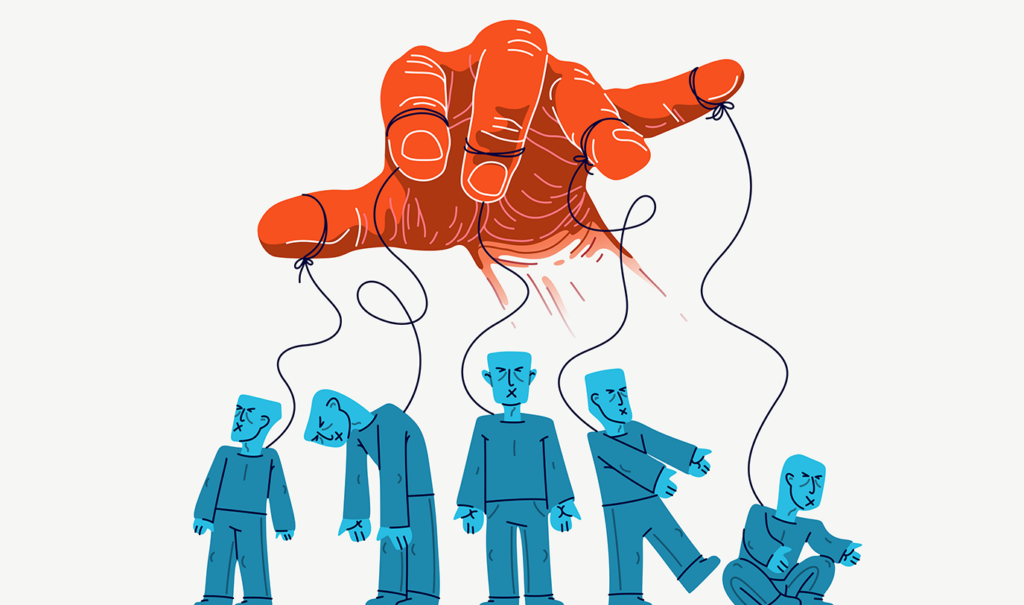

As we approach President’s Day, there is nothing presidential to celebrate. Instead of the dignified, just, ethical office we expect, we see crass, vindictive, and dehumanizing rhetoric. Whether by strategy or personality, the effect is the same: disorientation and conditioning that allows the consolidation of power and march toward authoritarianism to continue unchecked. This article examines how outrage becomes routine—and what that means for democracy.
Consider what has been said from the highest office in America in recent months:
In 2015, any one of these statements would have triggered immediate calls for resignation. Cabinet members would have distanced themselves. His own party would have rebuked him.
In 2025, they barely make the evening news.
This is what normalization looks like. And it is the most dangerous thing happening in America right now.
We didn’t arrive here overnight. We were conditioned.
In June 2015, Trump launched his campaign by calling Mexican immigrants “rapists.” It was shocking. Pundits predicted his campaign would collapse within weeks.
It didn’t. And each subsequent transgression shifted the baseline.
Calling Haiti, El Salvador, and African nations “shithole countries.” The 2005 Access Hollywood tape which captured Trump bragging about sexual assault. Telling four American congresswomen of color—three born in the USA—to “go back” to the “crime-infested places from which they came.” “Very fine people on both sides” after Charlottesville.
Each statement triggered outrage, then coverage, then absorption. By 2020, he had convinced 40% of Americans that an election certified by his own officials was “stolen”—a lie that led directly to January 6th. By the end of his first term, things that would have ended any previous presidency barely registered.
The outrage cycle became a treadmill. We kept running and the destination kept moving.
But this conditioning wasn’t just about accepting individual transgressions. It was about accepting a new framework: that truth is whatever he says it is. The goal is not to convince people of specific lies, but to destroy the shared concept of truth itself. Once that foundation crumbles, anything becomes possible.
Normalization doesn’t happen by accident. Each transgression follows the same trajectory: The statement or action is so far outside norms that it triggers immediate outrage. Media covers it extensively. Social media erupts. Everyone discusses it. There is no consequence, no political cost, no accountability, what was said does not matter. After a few hours, a new transgression occurs. Attention shifts. The previous shock is now part of the landscape. The baseline has shifted.
This is Steve Bannon’s explicitly stated strategy: “Flood the zone with shit.” The goal isn’t to persuade—it’s to overwhelm. When everything is outrageous, nothing is. When lies come faster than fact-checks, truth becomes exhausted.
The cycle doesn’t just normalize individual statements—it normalizes the method itself. After hundreds of iterations, we expect the pattern. When Trump says something shocking, we are shocked, outraged, see there is no consequence and unconsciously wait for the next shock which arrives soon. We are being trained to process authoritarian rhetoric as news cycle rather than an emergency. Our brains habituate. What triggers outrage the first time barely registers the hundredth time. We slowly become numb and immunocompromised to the outrage.
The volume creates helplessness. When outrageous statements come faster than we can process them, we feel powerless to respond. When we are repeatedly exposed to negative stimuli we cannot control, we eventually stop trying. The constant barrage means we are less likely to act, less likely to donate, less likely to vote—and more likely to simply shrug it off or not care.
The incoherence compounds the problem. Trump’s speeches have become longer, more rambling, more disconnected from any linear thought. He veers from topic to topic mid-sentence, repeats himself, invents words, makes claims that contradict claims he made minutes earlier. Fact-checkers can’t keep up with statements that aren’t coherent enough to fact-check. Critics struggle to rebut arguments that aren’t actually arguments. The sheer volume—dozens of outrageous statements per day—means each individual transgression gets less attention.
It’s not just “flood the zone with shit.” It’s flood the zone with incoherent shit, making serious analysis impossible.
The normalization of incoherence itself is dangerous. It erodes the expectation that leaders should think clearly, speak precisely, or make logical arguments. And it makes it nearly impossible to hold anyone accountable when nothing they say can be pinned down.
This is the goal. To distract, to numb and emotionally exhaust.
Language precedes action. The normalization of dehumanizing rhetoric isn’t just a theoretical concern—it’s already producing tangible harm.
Immigrants face escalating actions justified by the “invasion” and “poison” rhetoric. Mass deportations have accelerated, with documented cases of U.S. citizens wrongfully detained. As of October 2025, ProPublica confirmed at least 170 U.S. citizen detentions. ICE reported 32 detainee deaths between January and December 2025—more than the 24 deaths during Biden’s entire four-year presidency. The language of dehumanization creates permission for actions that would otherwise trigger widespread outcry.
Political opponents and elected officials face an environment of escalating threats. Chief Judge James Boasberg now faces DOJ disciplinary complaints and impeachment threats after ruling against the administration—part of a broader pattern where federal judges receive hundreds of death threats, universities face funding cuts for not suppressing protests, and nonprofits are warned their grants will disappear unless they stop advocating for immigrant rights
The Department of Justice has launched criminal investigations into Federal Reserve Chair Jerome Powell and Fed Governor Lisa Cook. Former FBI Director James Comey and New York Attorney General Letitia James were indicted (cases later dismissed as unlawfully brought). Former National Security Adviser John Bolton was indicted on classified documents charges. Democratic Senators Mark Kelly and Adam Schiff face DOJ investigations. Dozens have had security clearances revoked, including former Presidents Biden and Obama, former Secretaries of State Clinton and Blinken, and 50 former intelligence officials. Secret Service protection was stripped from former Vice President Harris, Hunter Biden, and former officials including General Mark Milley and Dr. Anthony Fauci—some despite ongoing threats.
LGBTQ+ individuals face record levels of hate crimes as rhetoric about “groomers” and “woke ideology” intensifies. When people are labeled as threats to children, violence follows—hate crimes against LGBTQ+ individuals are at record highs.
The escalation is deliberate and systematic. These aren’t isolated incidents but tests to see how far it can go—and the answer is quite far. The outrage machine spins, social media erupts, and then… nothing changes. The policy stands. The behavior continues. The line moves.
History shows us that dehumanizing rhetoric can create the conditions for mass violence. It doesn’t always—but the pattern is documented enough to warrant serious concern. Understanding these precedents isn’t about predicting the future; it’s about recognizing danger signs.
Nazi Germany: Before the camps came the words. Jews were called “vermin,” “parasites,” and “poisoners of the blood” for years before the camps
Rwanda, 1994: Hutu media spent months calling Tutsis “cockroaches” before the genocide. Radio broadcasts told listeners where to find them. Within 100 days, approximately 800,000 were murdered.
Myanmar, 2017: Years of calling Rohingya Muslims “illegal immigrants” rather than citizens preceded ethnic cleansing. Facebook posts calling them “animals” preceded military massacres. Over 700,000 were forcibly displaced.
The pattern is consistent across contexts: dehumanization creates psychological permission for violence. When people are called “vermin,” exterminating them becomes pest control. When they’re “poison,” removing them is detoxification. When they’re “invaders,” repelling them is self-defense. The language reframes atrocity as necessity, even virtue. And it works precisely because it happens gradually—each escalation building on the last, each new horror made thinkable by the one before.
Whether this escalates further depends partly on whether we continue to normalize it.
But Trump’s rhetoric only becomes normalized when those with power to resist choose not to. Normalization requires more than just repetition. It requires complicity—the silence of those who should speak.
The transformation of Republican leadership is a case study in capitulation.
In 2016, after the “Access Hollywood” tape, dozens of Republican officials withdrew their endorsements. House Speaker Paul Ryan said he was “sickened” and would no longer defend Trump. Sen. Lindsey Graham called him a “race-baiting, xenophobic, religious bigot.” Sen. Ted Cruz said, “This man is a pathological liar.”
Today, Ryan is gone. Graham is one of Trump’s staunchest defenders. Cruz campaigned enthusiastically for his reelection. When Trump echoed Hitler’s language, Republican leaders said nothing. When he used dehumanizing rhetoric about opponents, they remained silent. When his Cabinet officials called murdered Americans “terrorists,” they offered no rebuke.
The capitulation accelerated with each test. When Trump called white supremacists “very fine people,” most Republicans eventually fell in line. When he attempted to overturn the 2020 election, 147 Republican members of Congress voted to reject electoral college votes—even after the January 6th attack. Each acquiescence made the next one easier. By 2025, there’s almost no Republican pushback at all.
This isn’t mere political calculation. It’s moral surrender. Each silence grants permission for the next transgression.
Where are the Democrats? The party ostensibly in opposition has largely opted for a strategy of silence and procedural objection rather than sustained resistance.
As of early 2026, Trump has signed 239 executive orders—many clearly exceeding constitutional authority. Democratic leadership in Congress voted to provide funding for DHS and ICE even as mass deportations accelerated and citizens were wrongfully detained.
Democratic voters are looking for someone to fight. Instead, they see their leaders treating unprecedented authoritarianism as a normal political dispute to be resolved through the next election cycle. Some Democratic state attorneys general have filed lawsuits—71 as of early 2026—but federal Democratic leadership has been notably subdued.
The calculation appears transactional: don’t antagonize too much, wait for Trump to become unpopular, win in 2026. But this strategy treats constitutional crisis as electoral opportunity. It assumes democracy will still function normally by then. And it abandons vulnerable populations—immigrants facing deportation, citizens being detained, journalists under threat—to fend for themselves while Democrats position for the midterms.
When the opposition party treats authoritarianism as politics-as-usual, it normalizes it just as surely as the perpetrators do.
Where is corporate America? The CEOs who post about “values” on LinkedIn? The companies with pride flags in their social media avatars? Mostly silent.
After January 6th, major corporations paused political donations and released statements about democracy. It lasted months. By 2024, the money was flowing again. After the 2024 election, CEOs lined up to congratulate the winner—including those whose values statements explicitly condemned the language he routinely uses.
The corporate calculation is transparently transactional. Companies that posted black squares for Black Lives Matter stayed silent when Trump called Black members of Congress savages. Tech companies that celebrated Pride Month stayed silent when his administration moved to restrict LGBTQ+ rights. The pattern is clear: surface values when it costs nothing, silence when it matters.
This is rational self-interest. Antagonizing a president who promises retribution is bad for business. But it’s also moral cowardice.
Main stream news media by default lacks depth and analysis. What passes for news is often superficial, trivial, and sensational—designed for quick consumption rather than reflection. This creates an environment where unprecedented statements are treated as just another story, outrage becomes benign content and normalization thrives.
Trump’s speeches have become longer, more rambling, more disconnected from any linear thought—yet media dutifully report these statements as if they were coherent policy positions. A single rally might include fragments about windmills causing cancer, riffs on fictional serial killers, threats against judges, praise for dictators, and attacks on electric boats and sharks—all treated as Trump’s remarks on energy policy and national security. Headlines read “Trump criticizes Green Energy” when the actual quote is an incomprehensible rant.
Beyond just treating incoherence as policy, media often normalizes authoritarian rhetoric without framing it for what it is. Compare two framings of the same event: “Trump Shares Controversial Meme” vs “Trump Posts Racist Video”.
The first treats it as normal, the second names what’s happening. Too often, mainstream media chooses the first becoming complicit in normalizing the rhetoric.
There’s also economic pressure. Trump is good for ratings. Outrage drives clicks. The business model of news now depends partly on the chaos he creates. Some executives won’t say it aloud, but they know: covering Trump is profitable.
This is how democracies die—not with a dramatic collapse, but with a slow erosion of what we’re willing to tolerate.
We are being conditioned not to notice. This normalization is not inevitable. It is a choice—made daily, by leaders who stay silent, by media that treats the unprecedented as routine, and by each of us when we shrug and move on.
Normalization works because we let it. Every time we shrug off language that would have been disqualifying a decade ago, we shift the baseline. Every time we say “that’s just Trump being Trump,” we grant permission for the next transgression.
It’s natural to feel powerless and helpless. Our systems—corporations, democracies, most organizations—concentrate power in hierarchical structures where decisions flow from the top down. People within these hierarchies often enact policies without questioning them or supporting them, perpetuating harm through obedience rather than malice. We have not yet built the more egalitarian, dynamic alternatives we need—systems where power is distributed rather than concentrated, where change doesn’t depend on a single point of authority.
Our culture celebrates individualism and independence, but in times like this, that works against us. People unified can create change that individuals acting alone cannot. Joining existing groups like Indivisible, DSA Chapters, local mutual aid networks, or community organizing efforts gets people together for persistent, coordinated action rather than isolated gestures.
Call it what it is: Don’t say “controversial language.” Say “Racist rhetoric.” Don’t say “harsh immigration policy.” Say “ethnic cleansing rhetoric.” Precision matters. Name it. Every time.
Trump’s actions told us after the first election that he is an autocrat. He’s telling us again now—louder, cruder, more explicitly. The question is whether we’ve been so thoroughly conditioned that we’ve stopped hearing it.
A president calling citizens “garbage” is not normal. Officials labeling murdered Americans “terrorists” while video shows otherwise is not normal. Threatening military force against allies is not normal. Using Nazi rhetoric is not normal. Posting images of the Obamas as apes is not normal.
It becomes normal only if we let it.