Supporting Gaza: What If It Were Us?

Imagine if you were living in Gaza. Imagine waking up every day not knowing if you’ll survive the day. Not knowing if your children, your parents, your partner will be there by nightfall. Imagine your home reduced to rubble. Your child’s school bombed. The hospital where you were born razed to the ground.
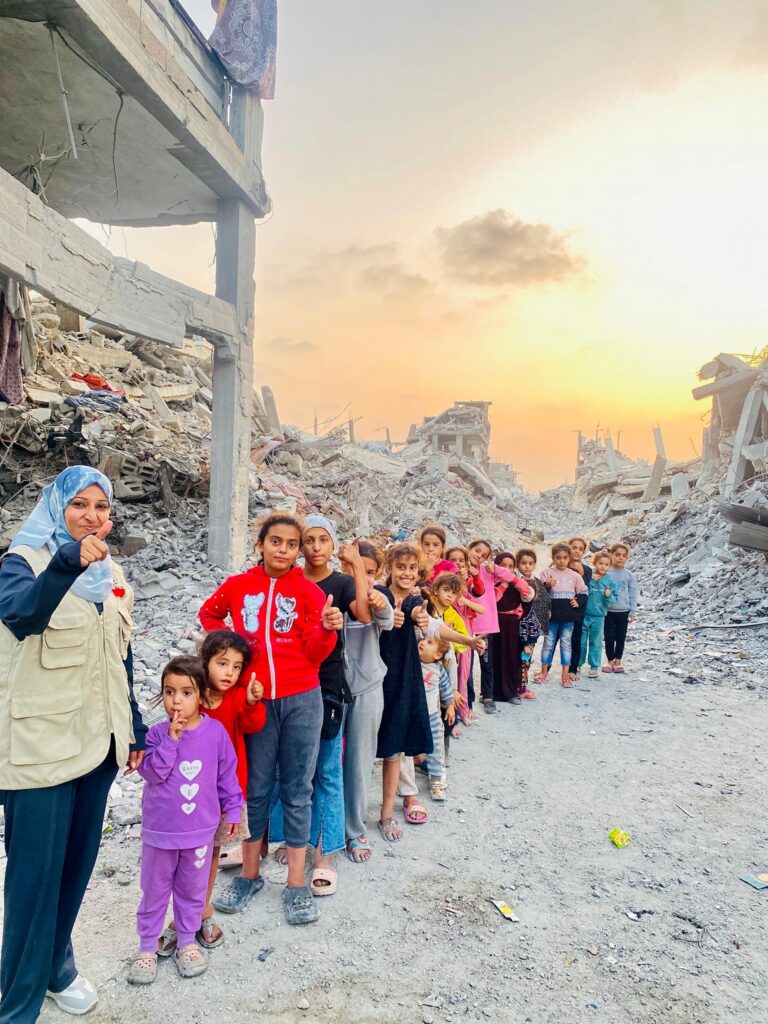
Imagine no clean water to drink. No food for your family. No shelter. No safety.
This isn’t a hypothetical scenario. This is the daily reality for millions of people in Gaza, which we may never hear about in mainstream media or our news feeds. Imagine the pain, the loss, the suffering. It could be us. The only difference is geography and circumstance.
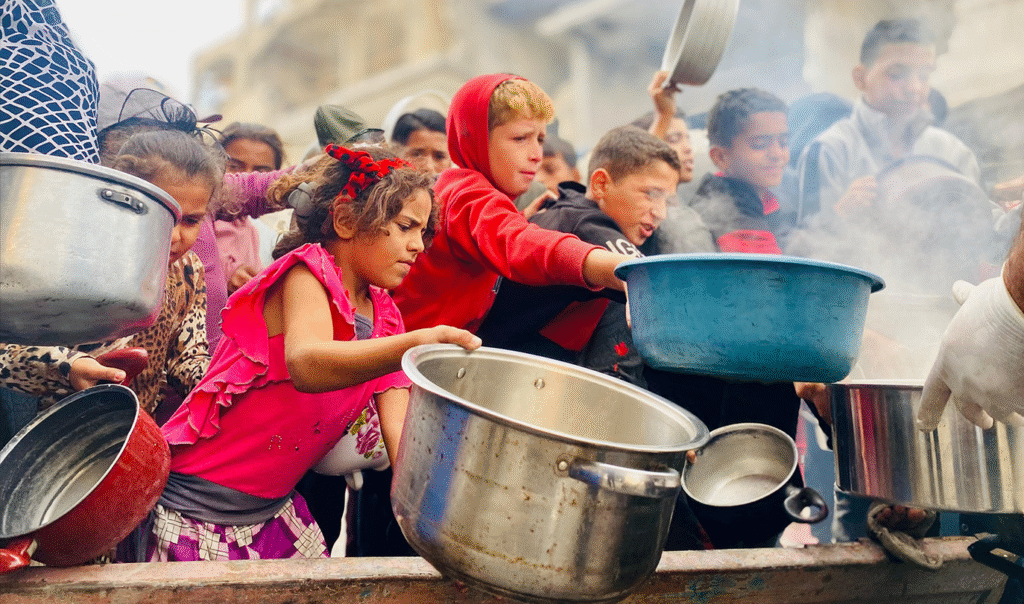
When soup kitchens operate in Gaza and other crisis zones, they’re not just serving meals, they’re affirming the fundamental truth that every human life has value. That no one deserves to starve. That compassion transcends borders, politics, and differences.
We support these efforts because we stand for humanity. We stand for those who have nothing. We stand for those whose voices are drowned out by the noise of the world. We stand because if the roles were reversed, we would desperately hope that someone, somewhere, would stand for us.
Empathy isn’t about agreement. It’s about recognizing the shared humanity in every person, especially those who are suffering.
Today, we can choose compassion. We can choose to see ourselves in their shoes. We can choose to act.
In Gaza, we’re backing Gaza Soup Kitchen, which has served over 3 million meals to families facing starvation along with water and shelters, and Dalia Association, which empowers Palestinian communities through grassroots development and civil society strengthening. Both are Palestinian-led. Both are adapting to the shifting needs on the ground. And when you transfer funds to them, it reaches real people.
People like 10-year-old Saleh Sadda, who joins hundreds of others every morning near Gaza’s port, holding a pan and waiting for food from Gaza Soup Kitchen. It’s become the only reliable source of nourishment for his family of five, displaced from the north. ‘Every day I get food from the soup kitchen for my family,” Saleh says. “We come here because we have no money. Prices are high. People have no food.”
Our shared humanity demands we don’t look away when people are suffering.